In today’s real estate market, overpricing is no longer a harmless starting point. Buyers are more informed, more data-driven, and quicker to form opinions than ever before. When a home enters the market priced above where buyers perceive value, the consequences are measurable—and often expensive.
Recent price-change data from higher-end segments in Norfolk and Middlesex Counties illustrates exactly how and why overpricing backfires.
What Happens When a Home Is Overpriced
Overpricing typically leads to one of two outcomes:
-
The home sits longer than expected and requires a price reduction.
-
The home eventually sells—but often for less than it would have if priced correctly from the start.
Once a listing undergoes a price reduction, buyer psychology shifts. The home is no longer viewed as “new” or “competitive.” It is viewed as negotiable.
Price Reductions Often Lead to Lower Final Sale Prices
Norfolk County ($1M+)
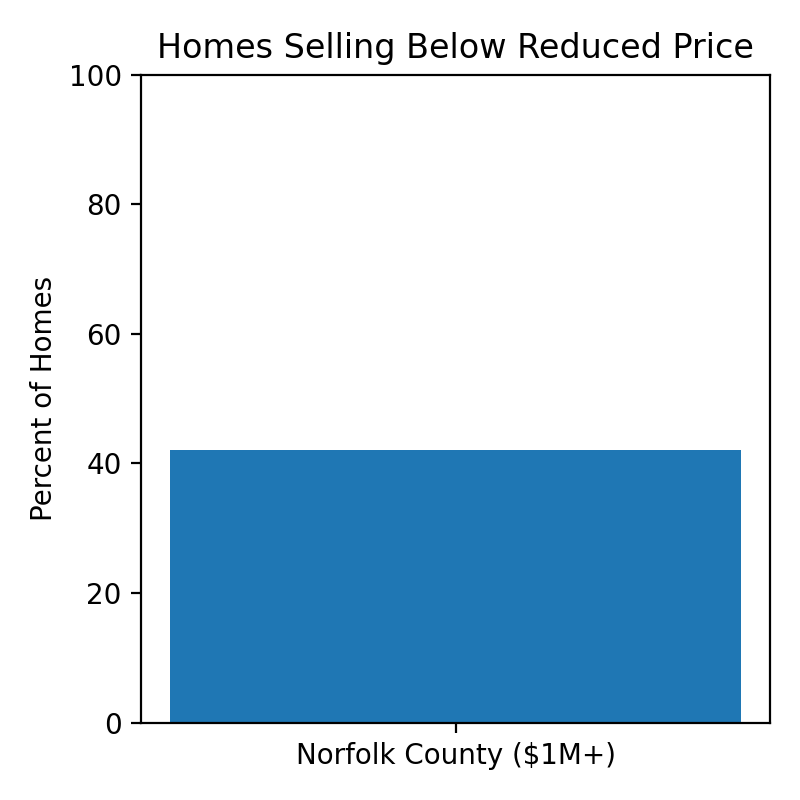
In Norfolk County, approximately 42% of homes priced above $1M that reduced their price ultimately sold below their reduced asking price.
Middlesex County ($2M+)
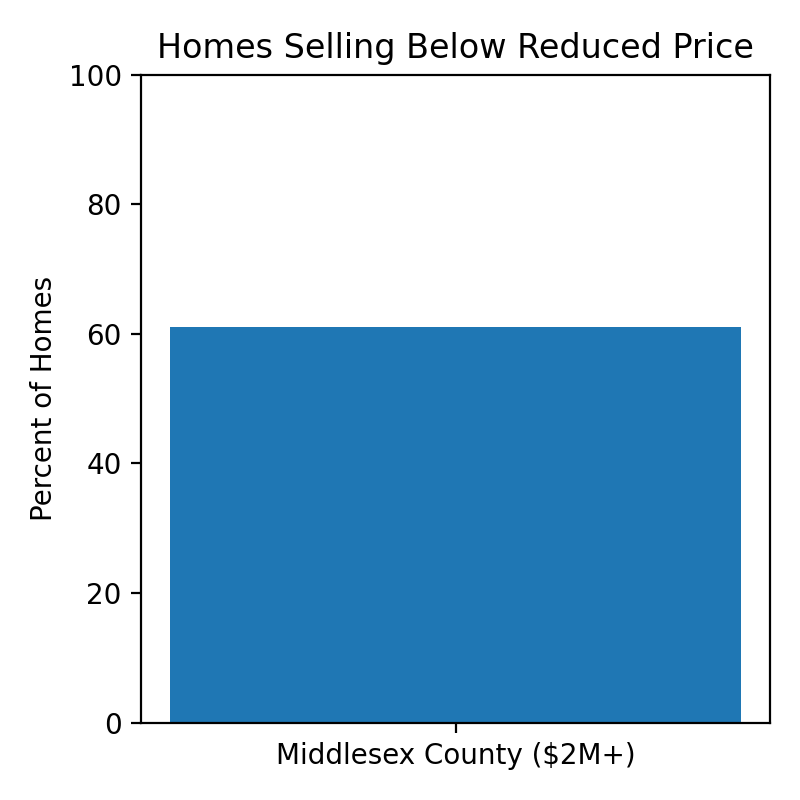
In Middlesex County’s $2M+ segment, that number rises to roughly 61%.
This is the compounding effect of overpricing. The first price misses the market, momentum is lost, and buyers begin negotiating from a position of strength—even after a correction.
Overpricing Also Increases Time on Market
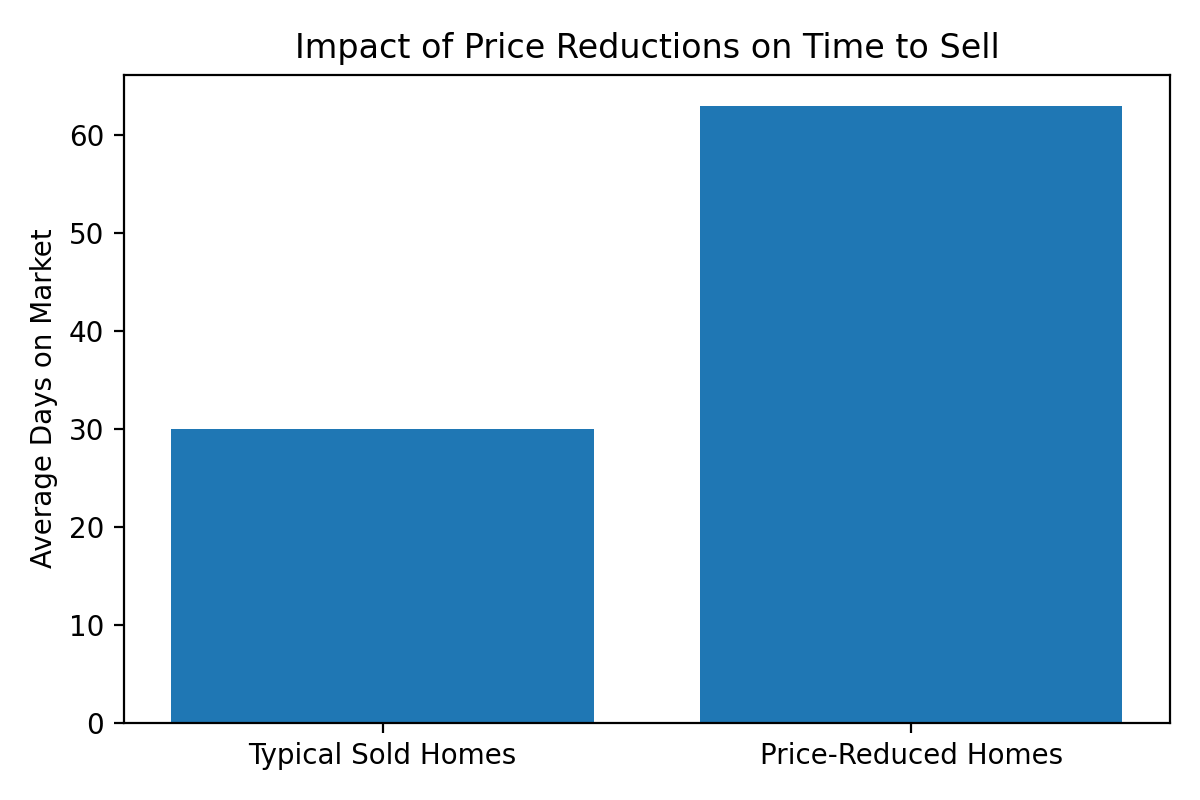
Your data shows a clear divergence in days on market:
-
Typical sold homes: ~30 days
-
Price-reduced homes: ~63 days
That extra month matters. Longer time on market increases carrying costs, amplifies buyer skepticism, and often invites more conservative offers.
Time is not neutral in real estate. It actively reshapes leverage.
Why Overpricing Backfires in a Data-Saturated Market
Buyers today receive:
-
“Still on market” notifications
-
automated price-change alerts
-
instant access to comparable sales
When a home launches above where buyers believe value sits, many buyers dismiss it early. Even if the price is later corrected, the initial perception lingers.
The first two weeks on market are critical. That is when urgency is highest and competition is strongest. Missing that window is difficult to recover from.
What Makes a House Overpriced?
A home is overpriced when it is positioned above current buyer demand, not when it fails to meet a seller’s expectations.
Common causes include:
-
Anchoring to peak-market sales that no longer reflect current conditions
-
Relying too heavily on automated valuation tools
-
Ignoring off-market or quiet sales that reveal where buyers are actually transacting
-
Underestimating the role of presentation—poor photography, minimal staging, or weak positioning can force price reductions even when the number itself is close
Pricing and presentation work together. One cannot compensate for the other.
Frequently Asked Questions About Overpricing and Buyer Behavior
What is a potential consequence of overpricing a property?
The most common consequence is longer time on market followed by a lower final sale price. As shown above, a significant share of price-reduced homes ultimately sell below even their revised asking price.
What happens if you price your house too high?
You risk missing the strongest buyer demand at launch. Once a home sits and then reduces, buyers often perceive leverage and negotiate more aggressively.
Is it rude to offer below the asking price?
No. Offering below asking price is not rude—it is a market response.
When a home has been on the market longer than expected or has reduced price, buyers often interpret that as an invitation to negotiate. A below-asking offer reflects perceived value and risk, not emotion.
Why is my property not selling at the listed price?
In most cases, the market is providing feedback. Either the price does not align with buyer expectations, or the presentation does not justify the number. Both issues are correctable, but timing matters.
What is a red flag when buying a house?
One of the most common red flags buyers notice is extended time on market combined with price changes. Buyers begin asking why others passed and how motivated the seller may be.
Even when the only issue was initial overpricing, perception changes—and perception influences offers.
What devalues a house the most?
The biggest driver of devaluation is loss of momentum.
Overpricing leads to longer days on market, which weakens negotiating position and often results in a lower final sale price. Cosmetic issues can be fixed. Time and perception are far harder to reverse.
How can I adjust my home’s price to attract more buyers?
Effective adjustments are strategic and decisive, not incremental. Small reductions often fail to reset buyer interest. Repositioning the home correctly—paired with strong presentation—is far more effective.
Are there pricing tools to estimate a better sale price for my home?
Automated tools are a starting point, but they are incomplete. A strong pricing strategy incorporates recent on-market and off-market sales, current absorption rates, and segment-specific buyer behavior.
Can virtual tour services help sell a property stuck on the market?
Virtual tours help once price and positioning are correct. They amplify exposure but do not overcome fundamental pricing misalignment.
The Strategic Takeaway for Sellers
Overpricing is not a neutral decision. It is a delay—and delay is costly.
Homes that launch aligned with buyer demand maintain leverage, sell faster, and achieve stronger terms. Homes that chase the market rarely do.
If you are considering selling, the most valuable first step is not choosing a number—it is building a pricing strategy grounded in real buyer behavior.
Molly Campbell Palmer
Global Real Estate Advisor
Gibson Sotheby’s International Realty
📞 508-269-0002
✉️ [email protected]