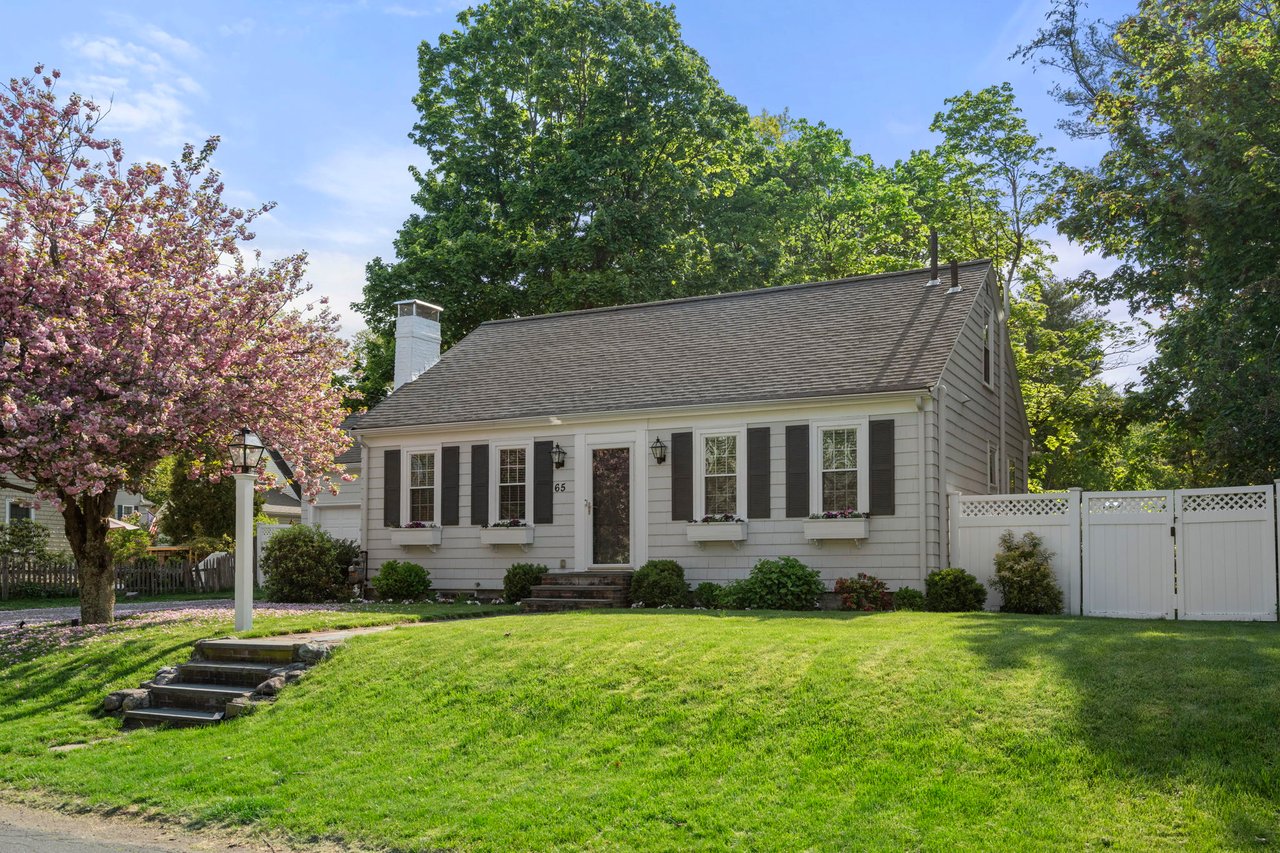
Selling a home in today’s Greater Boston market is not difficult — but selling it well requires judgment, timing, and local intelligence.
In towns like Wellesley, Weston, Needham, Natick, Dover, and Sherborn, the margin between a smooth, high-performing sale and a frustrating one has narrowed. The data from 2025 made this clear: prices largely held, demand remained present, but execution mattered more than it has in years.
Below are the most common home-selling mistakes I see — not in theory, but in real transactions across Norfolk and Middlesex County — and what consistently separates the best outcomes from the rest.
Mistake #1: Overpricing Based on the Past Instead of the Present
This remains the most costly error sellers make.
Many homeowners anchor to:
-
a neighbor’s sale from 12–18 months ago
-
peak-market headlines
-
automated estimates that lag real buyer behavior
The 2025 market showed that overpricing no longer creates urgency — it creates hesitation. Homes that miss the mark early often require price reductions later, which changes buyer psychology and weakens leverage.
In Wellesley and similar markets, the strongest results came from homes that launched precisely priced against current competition, not historical highs.
What works instead:
Pricing that reflects today’s inventory, buyer expectations, and inspection realities — not yesterday’s momentum. Many of these pricing challenges stem from skipping the fundamentals of listing your home in today’s Wellesley market, where preparation and positioning matter just as much as price.
Mistake #2: Treating Preparation as Optional
In premium suburbs, buyers are selective by default.
Deferred maintenance, poor photography, cluttered interiors, or vague listing descriptions are no longer overlooked simply because inventory is limited. In 2025, buyers showed a clear willingness to wait for homes that felt complete, clean, and thoughtfully presented.
This is especially true in towns with strong school systems and high price-per-square-foot thresholds, where buyers are already stretching financially.
What works instead:
Strategic preparation — not over-improvement, but clarity. Homes that communicate care, transparency, and readiness consistently outperform.
Mistake #3: Ignoring How Inspections Now Shape Negotiations
Inspection dynamics changed meaningfully in 2025.
Across Greater Boston, buyers are no longer expected to waive inspections as a baseline. Sellers who failed to anticipate this shift often found themselves negotiating reactively rather than from a position of strength.
Homes that were pre-inspected, clearly documented, or thoughtfully positioned around known issues retained control in negotiations. Homes that were not often conceded more than necessary.
What works instead:
Planning for inspections before going live — and using that information to guide pricing, disclosures, and expectations. Issues uncovered during inspections — particularly the hidden risks of unpermitted work in Wellesley — can significantly affect negotiations if they aren’t anticipated and addressed in advance.
Mistake #4: Assuming “More Inventory” Means Less Value
A common misconception I hear is that rising inventory automatically reduces home values.
The 2025 data did not support that conclusion.
Yes, inventory increased across Norfolk and Middlesex County. But average sale prices also rose year-over-year. What changed was not value — it was tolerance for error.
Buyers had more choice, which meant they could bypass homes that felt misaligned without abandoning the market altogether.
What works instead:
Understanding that competition now happens between listings, not just between buyers.
Mistake #5: Choosing Representation Based on Familiarity, Not Strategy
Selling a home at this level is not a transactional exercise. It is a positioning exercise.
The most successful sellers in Wellesley and surrounding towns worked with advisors who could:
-
interpret hyper-local data, not just town averages
-
anticipate buyer behavior, not react to it
-
adjust strategy in real time as the market responded
Experience matters — but relevance matters more.
What works instead:
A data-driven, market-aware approach that evolves with conditions, rather than relying on formulas that worked in a different cycle.
The Bigger Picture
The takeaway from 2025 is not that selling became harder — it became more precise. Buyer behavior in towns like Wellesley, Weston, and Needham is often shaped by school-driven demand across Greater Boston towns, which directly influences how quickly well-positioned homes move.
Homes did not fail because demand disappeared. They struggled when pricing, preparation, or positioning missed the moment.
That distinction will matter even more going forward.
In 2025, home values across Wellesley and the Greater Boston suburbs remained strong, but selling successfully required more precision than in prior years. Data from Norfolk and Middlesex County shows that overpricing, inadequate preparation, and poor inspection strategy were the most common reasons homes underperformed. Well-priced, well-prepared listings continued to sell efficiently, while misaligned homes faced longer timelines and price reductions. This article explains the most common home selling mistakes and what buyers and sellers should understand in today’s market.
Many sellers find that working with a data-driven local advisor makes the difference between simply listing a home and positioning it effectively from day one.
Frequently Asked Questions — Sellers
What are common home selling mistakes in Wellesley and similar Boston suburbs?
The most common mistakes include overpricing based on outdated comps, underestimating the importance of preparation, ignoring inspection strategy, and assuming demand will compensate for missteps. In 2025, buyers remained active, but they became far more selective.
Does overpricing a home really hurt the final sale price?
Often, yes. Homes that sit and later reduce price tend to attract more cautious buyers and weaker offers. Correct pricing at launch typically results in stronger negotiation leverage and a cleaner transaction.
Is it still a good time to sell in the Greater Boston suburbs?
For well-positioned homes, yes. Demand remains strong in towns like Wellesley, Weston, and Needham — but success depends on strategy, not timing alone.
Frequently Asked Questions — Buyers
Are there more opportunities for buyers now than in prior years?
Buyers generally have more selection than during peak scarcity years. However, well-priced, well-prepared homes still move quickly. Opportunity shows up in terms and choice, not necessarily steep discounts.
Should buyers expect inspections to be part of most transactions?
Yes. Inspections have largely normalized again across Greater Boston. Buyers should approach them thoughtfully, and sellers should plan for them strategically.
How much do town-by-town differences really matter?
They matter significantly. Buyer behavior, pricing sensitivity, and inventory dynamics can vary meaningfully between Wellesley, Natick, Dover, and Weston — even within the same county.
Molly Campbell Palmer
Global Real Estate Advisor
Gibson Sotheby’s International Realty
📞 508-269-0002
✉️ [email protected]