At the July 27 meeting of Natick's Zoning Board of Appeals, Chair David Jackowitz paused about 12 minutes in to explain what had happened. He told the room there had been "a massive upheaval of zoning law in Massachusetts" that had "significantly reduced the number of cases that need to come before this board." Later that night, the board announced that several cases on its July agenda no longer needed a hearing. In August, three of eight projects came off the agenda for the same reason, according to the Natick Report.
Jackowitz also said that projects the board might once have rejected, and that neighbors had objected to because of their size and scope, could now go ahead by right.
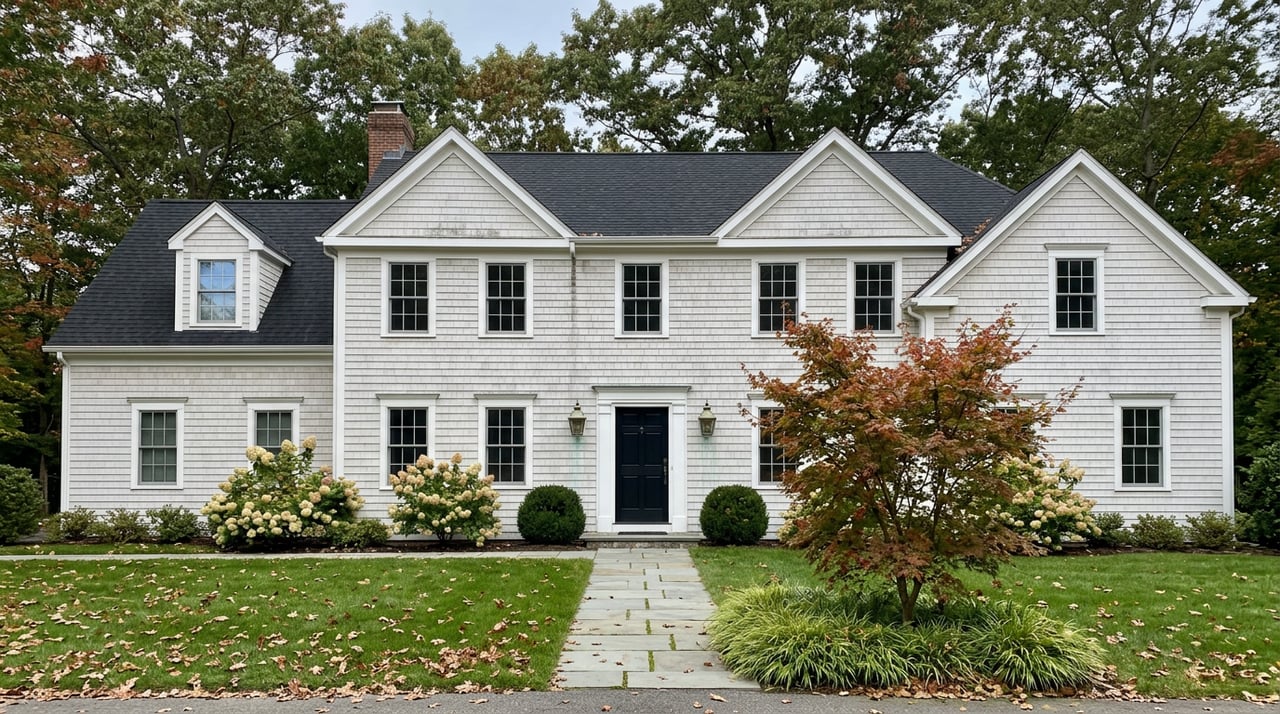
The same state law applies in Wellesley, a few miles east. Since July, it has quietly changed what an older house on a small or oddly shaped lot can become. Wellesley's Planning Board has discussed the change, but the town hasn't yet put any local response on paper. For a buyer pricing the renovation potential of a classic Colonial on a tight parcel, the opportunity is real and the rules for using it are still unsettled.
The change came in a budget bill
The changes were part of the Massachusetts fiscal year 2027 budget, which passed into law on July 9, 2026. The zoning provisions got little attention in the headlines, but land use law firms published client alerts within days. A Nixon Peabody alert dated July 17 sets out the amendments to Chapter 40A, the state Zoning Act. Here are the ones that matter most to a single-family homeowner, as that alert summarizes them:
- Nonconforming structures. Some structures and residential uses break the zoning rules only because of lot size or shape, frontage, lot coverage or floor-area ratio. They can now be extended or altered by right if they meet current height, story and setback rules.
- Variances. Applicants used to have to show a significant hardship based on features unique to the property. Now zoning boards weigh the benefits to the applicant and to the public, including the interest in producing housing, against any harm to the neighborhood. Boards can still consider soil, shape and topography, along with financial hardship, other ways to achieve the same result, and whether the difficulty was self-created.
- Timing. Variances now stay valid for two years instead of one. Boards can extend them for up to two years instead of six months.
- Zoning freeze. A project is now protected from later zoning changes once the owner applies for a special permit, building permit or other approval. Before, protection started only when the permit was issued.
- Anti-merger protection. This protection used to cover only lots in single- and two-family use. It now covers lots in any residential use.
The first item matters most for Wellesley. Many houses that predate today's lot-size and coverage rules are nonconforming only on those measures. Under the old system, an addition to one of them often meant going to the Zoning Board of Appeals and making a case. Under the new rule, if the addition meets height, story and setback limits, the lot-size, frontage, coverage and floor-area shortfalls no longer stand in the way.
Wellesley's officials read it the same way
Rob Watchilla became Wellesley's planning director in July. He was hired from a pool of more than 30 applicants and succeeded Eric Arbeene, who left at the end of 2025. In his first week, he began reviewing the town's zoning bylaws to find the ones that needed to line up better with state law.
At the Planning Board's July 27 meeting, he described the nonconforming-structure change in plain terms, as reported by The Swellesley Report:
Property owners "are allowed to essentially violate the lot area, frontage, [floor area ratio] as well as lot coverage requirements… I'm curious to see what case law arises from this over the next several months."
The Swellesley Report summarized his view this way: buildings on nonconforming lots can now be altered or extended, and perhaps reconstructed, by right as long as they meet setback, height and story rules. Watchilla called the variance changes "aggressive." Under the new standard, a variance is granted when strict enforcement of the bylaw would cause a "practical difficulty," and he said it remains to be seen how boards will apply that phrase.
Board member Jim Roberti wondered whether applicants might get creative and ask for several variances at once. Chair Marc Charney said he expects people to start testing the new rules, given how desirable Wellesley is as a place to live. "Get ready," he said. The report also said some board members were still learning the rules, which were described as intentionally vague in places, and that town counsel had shared its interpretations with town boards.
The town calendar has no zoning response yet
Natick's response showed up on its zoning board agenda within weeks. Its planning staff also floated a Special Town Meeting to explain the changes and update local bylaws. Wellesley's next chance to act is its own Special Town Meeting, which convenes Monday, November 9, 2026, at 7 p.m. in the Katherine L. Babson Jr. Auditorium at Wellesley High School. The town says the meeting will consider 16 warrant articles and is expected to continue on November 10 and November 16.
The Advisory Committee chair's letter, dated September 16, lists the notable articles. They include school air-conditioning design funds, a citizen petition to acquire Wight Pond, a Capital Stabilization Fund, union contracts and LED lighting at the Wellesley Free Library. None of the articles the letter names is a zoning bylaw change. The closest is Article 11, which would fund a Comprehensive Plan and is sponsored by the Planning Board. Annual Town Meeting voted that funding down this spring, partly because some members wanted the town to hire a planning director first. The letter doesn't describe Articles 1, 2 and 9. The Advisory Committee's full report, with its recommendations, is expected on or about November 2 on the town's Special Town Meeting page.
So Wellesley's likely first step is funding a plan, with bylaw changes to come later. In the meantime, the Zoning Board of Appeals keeps meeting. The October 8 agenda lists public hearings for addresses including 14 Heckle Street, 58 Cottage Street and 31 Leighton Road. An agenda shows only which cases are scheduled. It doesn't show how the new law affects any of them, and none of the sources reviewed reports a Wellesley case withdrawn or decided differently because of it.
How this changes the math on an undersized lot
For buyers, the change matters most to a specific kind of house: an older home that meets setbacks but sits on a lot smaller than today's minimum, or one whose coverage or floor-area ratio is already over the limit. That house may now have a by-right path to an addition that once depended on a zoning board's judgment. Three questions decide how much that path is worth today, and only one of them has a clear answer.
| Question | What the sources establish | What remains open |
|---|---|---|
| Does the lot-size or coverage shortfall still block an addition? | Under amended §6, not if height, story and setback rules are met | How Wellesley boards and courts apply it; Watchilla expects case law to develop |
| Will a variance be easier to get when setbacks are the issue? | The hardship test is replaced by a weighing that counts housing production | How "practical difficulty" will be applied locally |
| Do local reviews like Large House Review still apply? | Large House Reviews were still on the Planning Board's October 5 agenda | No published guidance on how they apply to by-right additions under §6 |
The table shows where the uncertainty sits. Setbacks, height and story limits still apply, so the extra room is on lots where the house already sits well within its setbacks. A narrow lot whose house is pushed against a side line gets less from the change than a small but deep lot with a modest footprint. That is something a careful look at a plot plan can reveal, and a listing's square-footage line can't.
The new zoning freeze also changes the timing for an owner planning an addition. Protection now starts when the permit application is filed, not when the permit is issued, so the filing date matters more if Wellesley later amends its bylaw. How that plays out for a particular property is a question for a land use attorney, but it's useful to know when weighing whether to buy now or wait for the town's next bylaw cycle.
Sellers face the other side of the same uncertainty. A house on an undersized lot used to sell with an implied discount for the zoning hurdle any expansion would face. Some of that hurdle is now gone under state law. Until local practice settles, buyers will value that change according to how much of the remaining uncertainty they are willing to take on.
The bills that haven't passed
Watchilla also briefed the Planning Board on proposals still moving through the State House as of July 27. One Senate bill version would allow duplexes by right in every residential zoning district, with an accessory dwelling unit permitted on top of the duplex. "This one's going to rattle a lot of cages," he said, adding that its passage is not certain. Other proposals would create a statewide site plan review standard and speed up permits for converting commercial buildings to residential or mixed use. That second change could matter in Wellesley, where many commercial properties have changed hands, including some owned now or in the past by Haynes Management. The research for this post did not confirm the current status of the duplex bill, so it remains a possibility and should not be treated as a rule.
Frequently asked questions
Does the change remove Wellesley's setback or height limits? No. As the Nixon Peabody alert describes it, the by-right path applies only when current height, story and setback rules are met.
Why does the Massachusetts General Laws website still show the old wording? As of this research, the legislature's online pages for Sections 6 and 10 of Chapter 40A still showed the earlier text. Law-firm summaries and local reporting describe the amendments as in effect.
Will Wellesley's Special Town Meeting address it? None of the articles named in the Advisory Committee chair's letter is a zoning bylaw change. The Advisory Committee report expected around November 2 will show the full set of motions.
If you own a house on a lot that has never quite matched the zoning map, or you're considering buying one, Molly Campbell Palmer can help you see what this summer's state law may add to its value, starting with a plot-plan review and an instant home valuation.
This article is general information, not legal, tax or financial advice. Consult a qualified professional about your situation.