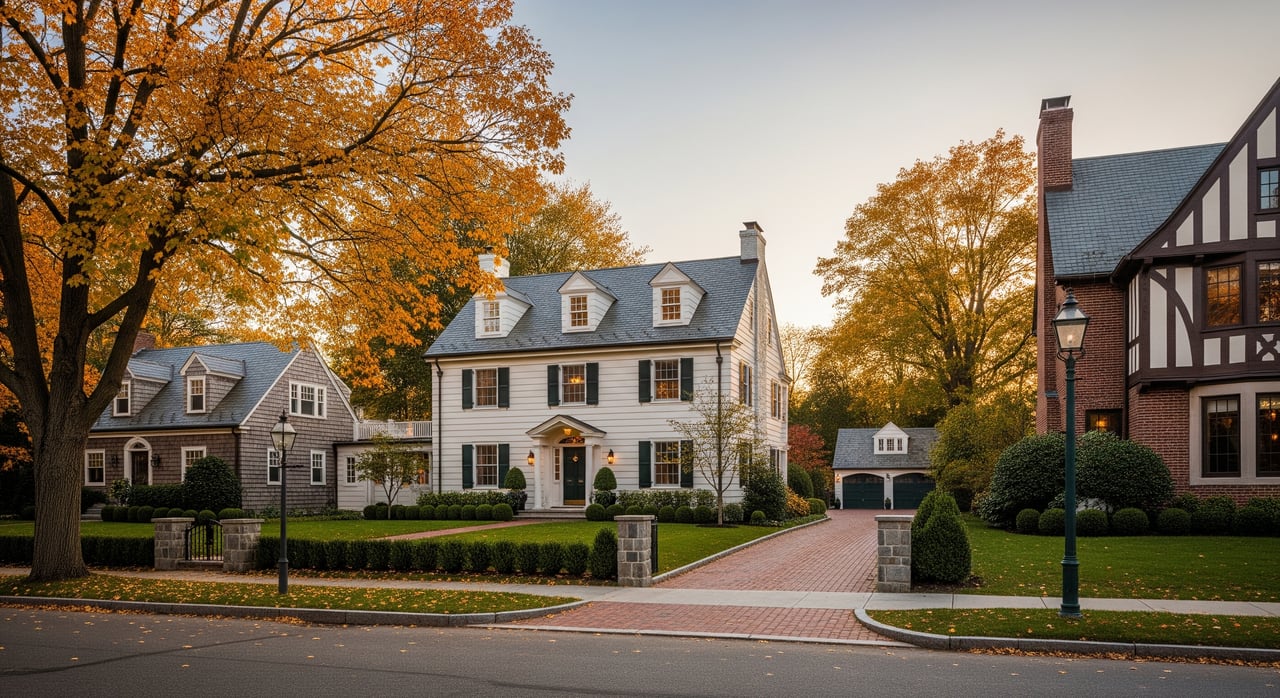
Thinking about buying or selling in Wellesley and wondering why two similar homes can price so differently? In this town, micro-markets matter. Lot size, architecture, walkability, and commuter rail access all shape value at the neighborhood level. In this guide, you’ll learn how Wellesley’s micro-markets align with price tiers, what moves a home up a tier, and how to read comps with confidence. Let’s dive in.
What is a micro-market?
A micro-market is a small, well-defined area within a town where homes share similar lot profiles, styles, and buyer demand. In Wellesley, these include places like Cliff Estates, Wellesley Farms, Poets’ Corner, and the Dana Hall area. Each pocket has its own history, streetscape, and inventory patterns that influence value. Understanding these nuances helps you set realistic expectations and make smarter decisions.
Price tiers at a glance
Wellesley is an affluent market where most single-family homes sell in the seven-figure range. Instead of focusing on a single town-wide number, think in tiers that reflect condition, lot, and location within each micro-market:
- Entry tier: Typically low seven figures in Wellesley context. Smaller lots and older homes that may need updates.
- Mid tier: Mid-to-upper seven figures. Updated homes on mid-sized lots with practical floor plans and modern systems.
- Upper-mid or premium tier: High seven figures to just under luxury. Larger renovated homes or new builds with quality finishes and more privacy.
- Luxury tier: Often $4M+ in town context. Estate properties, exceptional new construction, or significant historic restorations on larger parcels.
Note: Exact numbers vary by micro-market and change over time. Always anchor decisions to recent sold comps and active competition.
Micro-market snapshots
Cliff Estates
- Character: Park-like streets with mature trees and a quiet, estate feel.
- Lots and homes: Larger parcels common, from roughly half an acre to 2+ acres, with historic Colonials, Tudors, and substantial custom new builds.
- Tier profile: Upper-mid to luxury due to scale, privacy, and architectural presence.
Wellesley Farms
- Character: Village feel with its own commuter rail station and tree-lined streets.
- Lots and homes: Larger lots and estate-style properties, with a mix of classic Colonials and newer custom construction.
- Tier profile: Upper-mid to luxury, supported by lot size, architecture, and rail access.
Dana Hall area
- Character: Quiet residential streets near private school campuses and Wellesley Square.
- Lots and homes: Medium to larger lots, early 20th-century homes with steady renovations.
- Tier profile: Mid to upper-mid, with premiums for updated interiors and proximity to amenities.
Poets’ Corner
- Character: Near Wellesley College with a distinct neighborhood fabric and pockets of walkability to town.
- Lots and homes: A mix of compact parcels near the core and larger side-street yards, with historic homes and selective new construction.
- Tier profile: Mid to upper, influenced by location within the enclave and condition.
Wellesley Hills and Wellesley Square
- Character: Central and walkable to shops, dining, schools, and train stations.
- Lots and homes: More varied and often smaller than Farms or Cliff, with early-20th-century homes, mid-century stock, and infill.
- Tier profile: Broad spectrum that often includes entry-to-mid options for Wellesley, plus many mid-to-upper-mid properties.
Other pockets to watch
- Examples: Great Plain Avenue corridor, neighborhoods near Morses Pond, and scattered streets with larger parcels.
- Tier profile: Varies from mid to luxury depending on lot size, updates, and immediate access to amenities.
What moves a home up a tier
Value in Wellesley responds to a clear set of levers. If you want to shift a property from, say, mid to premium, focus on drivers that change how buyers experience space, function, and long-term ownership costs.
- Square footage and layout: Thoughtful additions that improve daily living areas, sightlines, and bedroom-bath balance can re-tier a home.
- Systems and envelope: New HVAC, electrical, plumbing, roofing, windows, and insulation reduce buyer discounts and increase competitiveness.
- Kitchen and bath quality: High-utility rooms set buyer perception. Quality finishes and well-designed layouts matter.
- Lot and privacy: Larger, usable parcels with outdoor living potential often outperform smaller lots even at a lower price-per-sqft.
- Location premiums: Comfortable access to commuter rail and village amenities can nudge a home into a higher tier.
New construction’s ripple effect
New builds in Wellesley tend to price at a premium per square foot and often reset comparables in premium and luxury tiers. Limited supply of larger lots concentrates demand, so high-performing new construction can lift nearby valuations. At the same time, newer inventory creates competition that puts pressure on older homes that lack updates. If you own an older property near new construction, strategic renovations and strong presentation can help you compete.
How to read comps in Wellesley
Pricing in a micro-market works best when you compare like for like. Here is a simple, defensible approach you can expect from a data-forward analysis:
- Pull recent solds: Focus on the past 6 to 12 months within the same micro-market for similar bed-bath count and finished square footage.
- Normalize by size: Compute price-per-square-foot and evaluate how lot size affects it. Larger lots can reduce price-per-sqft while increasing total value.
- Adjust for condition: Separate renovated or new-build comps from original-condition homes. Buyers compare by finish level and layout.
- Consider access: Note whether comps are within a comfortable walkshed to train stations or town centers.
- Validate outliers: Exclude unusual sales such as lot assemblages or properties with atypical constraints.
Method note: Many pros define tiers relative to a neighborhood median. One practical framework is Entry under 0.8 times the median, Mid at 0.8 to 1.25 times, Upper-mid at 1.25 to 1.75 times, and Luxury above 1.75 times. Then apply sensible adjustments for lot size and recent renovations or new construction.
Buyer cheat sheet
Buying in Wellesley is about fit as much as price. Use this quick filter to align your search with the right micro-markets.
- Prioritize scale and privacy: Start with Cliff Estates and Wellesley Farms for larger lots and estate settings.
- Value character and access: Include Poets’ Corner and parts of Dana Hall for historic charm and proximity to amenities.
- Want a central lifestyle: Explore Wellesley Hills and Wellesley Square for walkable options across a broader price spectrum.
- Watching the budget: Look for smaller lots or homes needing updates in central neighborhoods to enter at the town’s lower tiers.
Seller checklist to lift your tier
If your goal is to reach a higher tier or shorten days on market, prioritize high-impact, market-proven steps.
- Fix the fundamentals: Address roof, HVAC, electrical, and plumbing before cosmetic work to remove buyer discounts.
- Upgrade high-visibility zones: Invest in kitchens, primary suites, and first-floor flow. Consider a mudroom or laundry relocation for daily-use wins.
- Elevate presentation: Design-forward staging, landscaping, lighting, and photography can move perception within a tier and support premium outcomes.
- Document improvements: Permits and contractor records help buyers and appraisers value upgrades correctly.
- Study nearby new builds: Align finishes and layout choices with the premium comps setting today’s bar.
Build a tier-smart plan
Every Wellesley home lives within a micro-market that sets the context for pricing and potential. When you match the right design updates with data-backed comps, you position your home to compete at the top of its tier or jump to the next one. Whether you are buying or selling, a clear, neighborhood-level strategy will save time and protect value.
Ready to map your micro-market, align to the right tier, and plan a high-impact path forward? Connect with Molly Campbell Palmer to get a tailored analysis and design-led strategy.
FAQs
What is a Wellesley micro-market and why does it matter?
- A micro-market is a small neighborhood cluster with similar lots, styles, and demand; it matters because pricing, pace, and buyer expectations vary street to street in Wellesley.
How do Wellesley price tiers work across neighborhoods?
- Tiers are relative to each micro-market’s recent median, then adjusted for lot size, condition, and access to amenities, which is why similar homes can price differently by area.
How can renovations move my Wellesley home up a tier?
- Structural improvements that add usable square footage and modern systems typically have the greatest tier impact, especially when paired with a design-forward kitchen and baths.
How does proximity to the commuter rail affect value?
- Homes within a comfortable walkshed to stations often earn a location premium, which can raise their realized tier compared to similar homes farther away.
How should I price a 4-bedroom, 2,500 sq ft home?
- Use recent micro-market comps with similar size and condition, adjust for lot and updates, and benchmark against local medians to set a defensible range.
What is the effect of new construction on nearby values?
- High-performing new builds can reset premium and luxury benchmarks, lifting nearby values while raising the bar for older homes to compete through updates and presentation.