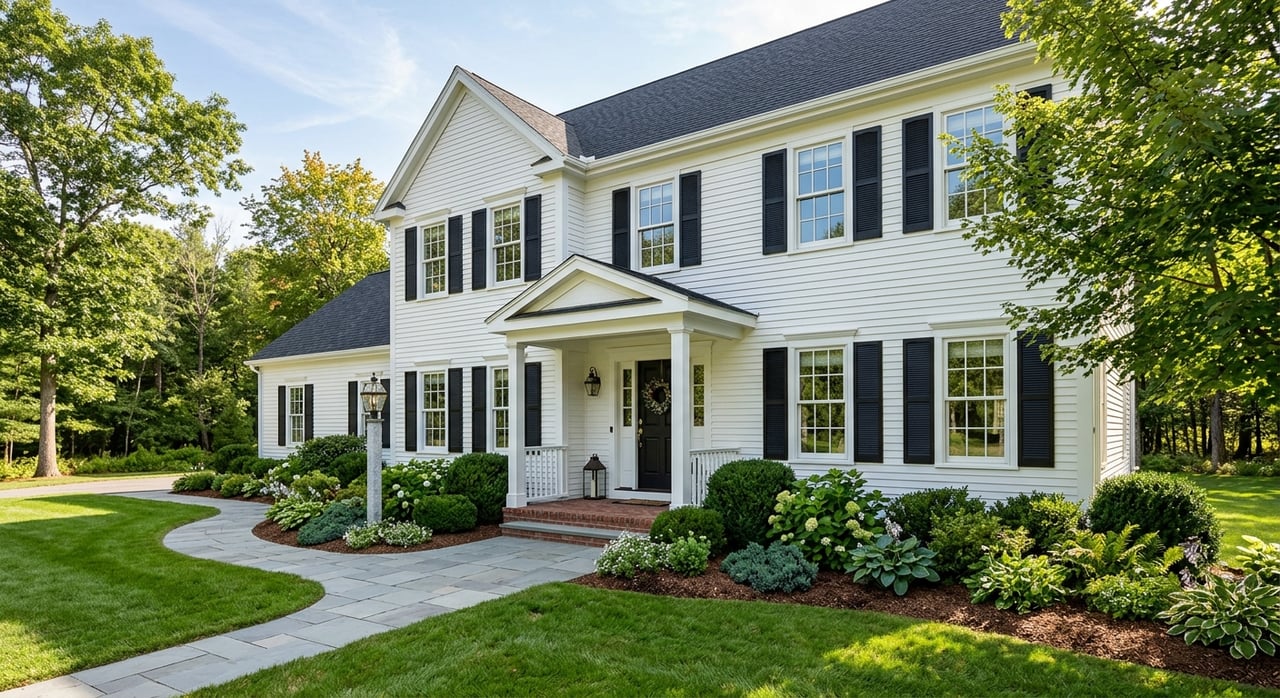
If you are selling in Wellesley, the biggest pricing mistake is assuming every well-kept home will spark a bidding war. This market is still strong, but buyers at the $2 million-plus level are selective, payment-conscious, and quick to compare your home with every other serious option in town. The good news is that with the right price, presentation, and launch plan, you can still create the kind of early momentum that leads to strong offers. Let’s dive in.
Why pricing matters more in Wellesley
Wellesley remains one of Greater Boston’s highest-priced suburban markets, but the data points to measured competition, not automatic frenzy. As of spring 2026, sources place typical home values and prices in roughly the $2.0 million to $2.3 million range. Zillow estimated the average Wellesley home value at $2,023,292 as of March 31, 2026, while Realtor.com showed a median listing price around $2.25 million.
MLS PIN data adds more context. In the Wellesley Area Market Review prepared on April 16, 2026, single-family homes averaged a $2.28 million sale price, 70 days on market, 40 days to offer, and 98.4% of list price. Inventory was 2.31 months of supply for single-family homes, while condos were somewhat slower at 74 days on market, 61 days to offer, and 2.81 months of supply.
That matters because it shows buyers are active, but not indiscriminate. In other words, your list price has to do more than reflect value. It has to attract the first wave of qualified buyers quickly.
List price is a signal
In a multiple-offer market, sellers often think of list price as a starting point for negotiation. In reality, buyers read it as a signal about value, expectations, and urgency. If your home is priced well, it can pull in strong early traffic and encourage buyers to act before someone else does.
If it is priced too high, the opposite can happen. National guidance cited in the research report notes that homes priced even 3% to 5% above market can sit longer and often require deeper price reductions later. In Wellesley, where buyers are comparing homes across a narrow but expensive range, even a small pricing stretch can push your listing out of the most relevant search bracket.
That is especially important at this price point. A modest percentage gap here can translate into a very large dollar amount, and buyers notice that immediately.
The first weekend often sets the tone
The strongest pricing strategies are built around launch, not correction. Once a home hits the market, the first round of buyer attention is often the most valuable because it includes the most prepared and motivated shoppers.
MLS timing supports that point. In 2026 year to date, single-family homes in Wellesley averaged 40 days to offer, while condos averaged 61 days to offer. That does not mean every home should expect an offer right away, but it does mean your first days on the market are critical.
If the home is priced correctly and fully prepared, that early exposure can create urgency. If the home feels overpriced or unfinished, buyers may wait, and the sense of competition fades fast.
Why Wellesley comps need a closer look
Not all Wellesley homes compete with each other equally. The town includes distinct villages and areas such as Wellesley Square, Wellesley Hills, the Fells area, and Linden Square, and it also uses Neighborhood Conservation Districts to preserve neighborhood character.
For sellers, that means a comparable sale is only useful if it is truly comparable. A home in one part of town may not map neatly onto another based on location, setting, condition, lot characteristics, or renovation level. Pricing based on broad town averages alone can miss what your actual buyer pool is willing to pay.
This is where local, neighborhood-level analysis matters most. A smart pricing strategy looks beyond recent sale prices and asks which homes buyers would genuinely compare to yours right now.
Price for the right buyer pool
The goal is not to test the absolute ceiling and hope the market catches up. In most cases, the stronger move is to price for the most likely qualified buyer pool from day one.
That approach can feel counterintuitive, especially in a market known for high values. But when inventory is limited and buyers are watching closely, a well-calibrated list price can do more to strengthen your negotiating position than an ambitious one. It invites action instead of hesitation.
In Wellesley’s current market, that often means pricing to generate serious showings early, rather than pricing above market and waiting for buyers to prove you right. The data suggests selectivity, so your strategy should match that reality.
Presentation is part of pricing
Pricing and presentation should never be treated as separate decisions. Buyers do not evaluate your home as an abstract number. They react to how it looks, how it feels, and whether it seems move-in ready at your asking price.
According to the 2025 Profile of Home Staging cited in the research report, 83% of buyers’ agents said staging made it easier for buyers to visualize a property as a future home. The same report found that 17% of buyers’ agents said staging increased the dollar value offered by 1% to 5%.
At Wellesley price points, that range can be meaningful. Even small improvements in perceived value can represent a significant difference in the final sale outcome.
The rooms that matter most
The staging research identified the living room, primary bedroom, and kitchen as the most important spaces to stage. That aligns with how buyers tend to shop in design-conscious suburban markets.
Before launch, focus on:
- Clean, bright, well-lit rooms
- Neutral, scaled furnishings
- Minor repairs and touch-ups
- Strong exterior condition and entry presentation
- Professional photography and visual storytelling
This is not about overdoing it. It is about helping buyers connect the asking price to what they see the moment they step inside or view the photos online.
Strong offers are about more than price
When a home attracts multiple offers, the highest number is not always the strongest outcome. The research report notes that sellers should weigh the full offer package, including financing strength, contingencies, inspection terms, and closing flexibility.
That is especially true in a high-value market. A clean, well-supported offer with fewer complications can be more attractive than a higher headline number that carries more risk. If your pricing strategy is effective, it should not just bring in offers. It should bring in offers worth comparing.
What sellers should review before listing
Before you launch, it helps to discuss a few key questions with your listing agent:
- Which recent closed sales are truly comparable by village, condition, lot, and updates?
- What prep work is most likely to improve buyer perception at this price point?
- How will the first weekend be structured?
- Will there be an offer deadline?
- How will competing offers be evaluated beyond purchase price?
These questions can help you move from guesswork to strategy. In a market like Wellesley, details matter.
A practical pricing mindset for 2026
If you are preparing to sell in Wellesley, the best pricing mindset is simple: be precise, not optimistic. Broad demand still exists, but buyers are more selective than the market’s reputation may suggest.
A successful launch typically combines three things:
- Accurate pricing based on true local comparables
- Thoughtful presentation that supports the price
- A clear plan for the first wave of showings and offers
That combination gives your home the best chance to stand out in a crowded field of high-value options. It also helps you protect momentum, which is often the difference between a strong early result and a later price adjustment.
In Wellesley, pricing strategy is not just about naming a number. It is about positioning your home so buyers understand its value quickly and compete with confidence.
If you are thinking about selling and want a pricing strategy built around Wellesley’s micro-markets, buyer behavior, and design-led presentation, connect with Molly Campbell Palmer for tailored guidance.
FAQs
How should you price a home in Wellesley’s multiple-offer market?
- You should price based on true comparable sales, current competition, and the buyer pool for your specific area of town, rather than assuming every listing will attract a bidding war.
What do Wellesley market stats say about seller competition in 2026?
- Current data shows a high-value market with meaningful buyer demand, but not automatic bidding wars, with single-family inventory around 2.31 months of supply and homes averaging 98.4% of list price.
Why do local comps matter so much when pricing a Wellesley home?
- Wellesley has distinct villages and neighborhood differences, so a sale from another pocket of town may not reflect how buyers will value your home.
Does staging affect pricing strategy for a Wellesley listing?
- Yes. Staging and presentation can influence how buyers perceive value, and research cited in the report found that some buyers’ agents saw staged homes increase offer value by 1% to 5%.
What should sellers review besides price in a Wellesley multiple-offer situation?
- Sellers should compare financing strength, contingencies, inspection terms, and closing flexibility, because the strongest overall offer is not always the one with the highest price.